
Mount Manaslu, whose name derives from the Sanskrit word “manasa” meaning “mountain of the spirit,” rises majestically to 8,163 meters as the eighth-highest peak on Earth. The Manaslu Circuit Trek that encircles this formidable giant has steadily gained recognition among serious trekkers as one of the Himalayas’ premier adventures—a journey that delivers everything devotees seek in mountain travel while remaining refreshingly free from the crowds that characterize more famous routes. This trek represents a perfect synthesis of challenge and reward, culture and nature, solitude and community.
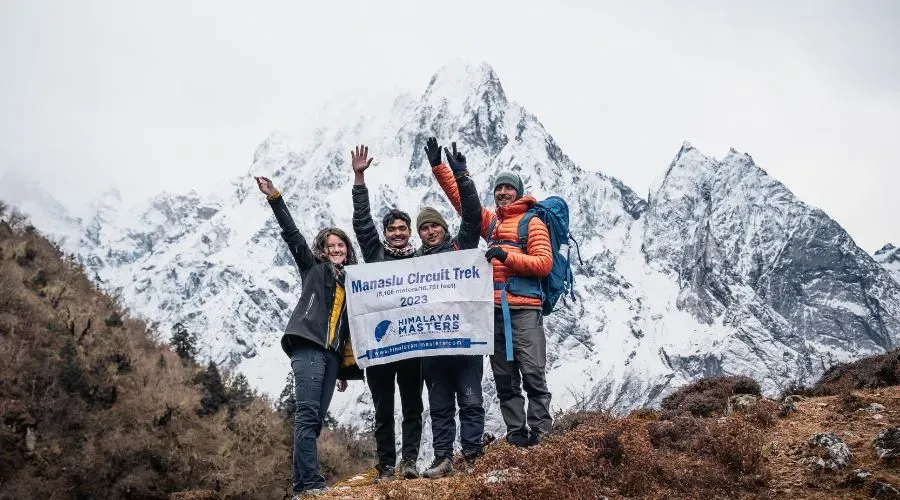
The Manaslu Advantage: Why This Trek Stands Apart
The Manaslu Circuit Trek occupies a unique position in Nepal’s trekking hierarchy. Unlike the heavily trafficked trails to Everest Base Camp or around the Annapurna massif, Manaslu maintains an authentic wilderness character that recalls what Himalayan trekking offered before mass tourism arrived. This preservation stems partly from geography—the route’s remoteness makes access more difficult—and partly from policy, as the region’s restricted status requires special permits and mandatory guided trekking.
The circuit’s routing creates a logical and satisfying journey. Beginning in low-elevation valleys where subtropical climate supports rice cultivation and banana plants, the trail ascends gradually through multiple climatic zones before reaching alpine heights. This progression allows for natural acclimatization while presenting constantly changing scenery that prevents the monotony sometimes encountered on out-and-back routes. The crossing of Larkya La Pass at 5,160 meters provides a definitive climax before the circuit completes its loop by descending into the Annapurna region.
What truly distinguishes Manaslu, however, is the cultural dimension. The region’s population reflects centuries of Tibetan influence, with Buddhism permeating daily life in ways that feel authentic rather than performative. Villages retain traditional architecture, religious practices continue without significant modification for tourist consumption, and interactions with local residents carry a genuineness often absent in more commercialized areas. Trekking here feels like genuine cultural exchange rather than observation of a living museum.
Route Highlights and Geographic Splendor
The Manaslu Circuit Trek unfolds over approximately 177 kilometers of trail, each section presenting distinct character and challenges. The initial days follow the Budhi Gandaki River northward through deep gorges where the trail clings to cliff faces and crosses the river repeatedly on suspension bridges. These lower sections test balance and nerve while introducing trekkers to the trail’s physical demands in a relatively forgiving elevation range.
The middle section, particularly the stretch from Namrung through Lho to Samagaon, enters high-altitude Buddhist territory where the landscape opens into broad valleys ringed by towering peaks. Manaslu dominates the skyline, its massive bulk visible from multiple villages. Side trips from Samagaon to Manaslu Base Camp or Pungyen Gompa add optional days that enhance acclimatization while providing additional perspectives on the mountain and its glacial systems.
The final ascent to Larkya La Pass typically begins in pre-dawn darkness from Dharamsala, with trekkers navigating moraine and eventually snow slopes as dawn breaks over the surrounding peaks. The pass itself presents a lunar landscape of rock and ice, with prayer flags marking the summit and panoramic views extending across dozens of peaks including Himlung Himal, Cheo Himal, and Annapurna II. The subsequent descent drops precipitously into the Dudh Khola valley, completing the circuit’s grand loop.
Comprehensive Cost Analysis for Budget Planning
Understanding the Manaslu Circuit Trek cost requires examining both fixed and variable expenses that combine to determine total investment. Unlike some Nepali treks where independent travel is permitted, Manaslu’s restricted area designation necessitates organized arrangements, which standardizes certain costs while providing security and support that justify the premium.
Permit Requirements and Costs: The bureaucratic requirements for Manaslu create the foundation of fixed costs. The Manaslu Restricted Area Permit varies seasonally: autumn season (September-November) costs $100 for the first seven days plus $15 for each additional day, while spring and other seasons charge $75 for the first week and $10 daily thereafter. The Manaslu Conservation Area Project (MCAP) permit adds approximately $30, and since the route exits through the Annapurna region, the Annapurna Conservation Area Project (ACAP) permit ($30) is also required. These permits alone total $160-190 before any services are purchased.
Organized Trek Package Pricing: Most trekkers book complete packages through Kathmandu-based agencies, with prices ranging considerably based on service levels and group size. Budget packages start around $950-1,200 per person for basic teahouse treks with standard services. Mid-range options offering better accommodation selections, experienced guides, and comprehensive support cost $1,400-1,800. Premium packages incorporating higher-quality lodges, smaller group sizes, and additional services can reach $2,200-2,800.
These packages typically include permits, guide and porter services, accommodation, meals during the trek, and ground transportation to and from Kathmandu. Understanding exactly what each package covers is essential, as variations exist between operators regarding inclusions like Kathmandu hotel nights, equipment provision, or insurance coverage.
Independent Cost Components: For those assembling their own trek rather than buying packages, individual cost elements include guide fees ($25-35 per day), porter wages ($20-25 daily), accommodation ($3-7 per night increasing with altitude), meals ($5-10 per dish, higher at elevation), and transportation ($10-20 for bus service from Kathmandu to trailhead and return). A two-week trek’s accommodation and food expenses total approximately $450-650, with guide and porter services adding another $600-850 for the journey duration.
Additional Expenses: Beyond the core trek costs, budget for equipment rental if needed ($2-3 daily for sleeping bags, jackets, etc.), tips for guides and porters (customarily $150-250 total depending on service quality), personal expenses like snacks and beverages ($100-200), and comprehensive travel insurance including helicopter evacuation coverage ($150-250). WiFi access, battery charging, and hot showers incur small fees at higher elevations that accumulate over two weeks.
Timing Your Trek: Seasonal Strategies
Season selection dramatically impacts both the Manaslu Circuit Trek experience and cost considerations. The autumn window from late September through mid-November represents peak season, offering stable weather, clear mountain views, and comfortable temperatures. However, this popularity increases both teahouse demand and overall costs, with some operators charging premium rates during October.
Spring season, spanning March through May, presents excellent alternative timing with moderate temperatures and spectacular rhododendron blooms coloring mid-elevation forests. Early spring can still carry winter snow at high passes, while late May approaches monsoon season with increasing precipitation risk. Costs during spring typically run 10-15% below autumn peaks.
Winter trekking (December-February) attracts only the hardiest adventurers, as extreme cold and deep snow often close Larkya La Pass entirely. Monsoon season (June-August) brings heavy rain, leeches at lower elevations, and obscured views, though intrepid trekkers willing to accept these conditions find dramatically reduced costs and near-empty trails.
Preparation Essentials for Success
Physical conditioning for the Manaslu Circuit Trek should begin at least eight weeks before departure. The trek demands cardiovascular endurance for sustained elevation gain, leg strength for continuous ascent and descent, and core stability for navigating uneven terrain with a backpack. Training regimens should include long hikes with progressive pack weights, stair climbing for vertical conditioning, and general fitness maintenance.
Altitude preparation deserves special attention. While the route’s gradual elevation profile aids acclimatization, individual responses to altitude vary unpredictably. Understanding altitude sickness symptoms, carrying appropriate medications, and maintaining realistic expectations about pace allows for safe progression. Rest days built into itineraries serve crucial physiological purposes beyond simple sightseeing.
Gear selection balances weight considerations against high-altitude necessities. Quality sleeping bags rated for -10°C minimum, layered clothing systems, waterproof shells, and broken-in boots form the foundation. Trekking poles significantly reduce knee stress during long descents, while headlamps, water purification, and basic first aid supplies address practical needs.
Cultural Sensitivity and Responsible Trekking
Traveling through communities where traditional lifestyles persist requires cultural awareness and respectful behavior. Buddhist customs include clockwise circumambulation of religious sites, removing shoes before entering monasteries, and asking permission before photographing people or religious objects. Modest dress, particularly when visiting villages and religious sites, demonstrates respect for local values.
Environmental responsibility on the Manaslu Circuit Trek means carrying out all non-biodegradable waste, minimizing plastic consumption, and supporting lodges that employ sustainable practices. The region’s fragile ecosystems suffer from increasing trekker traffic, making individual choices about waste management and resource consumption collectively significant.
Conclusion
The Manaslu Circuit Trek offers something increasingly rare in our interconnected world: authentic adventure through landscapes where human presence remains minimal and where ancient cultures continue largely undisturbed by modernity’s relentless advance. While the Manaslu Circuit Trek cost represents substantial investment—typically $1,500-2,500 when accounting for all components—this expenditure purchases an experience that transcends simple recreation, offering instead a genuine journey into the heart of the Himalayas.
